Gunge in a Can: What a Sealant Kit Cannot Do When a Tyre Lets Go
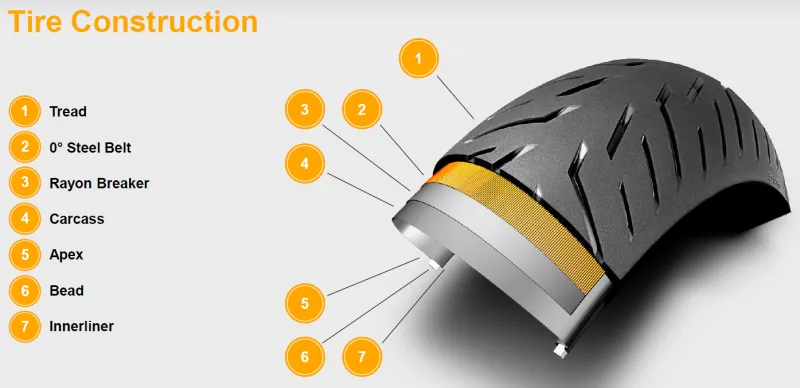
Photo: tyre sealant inflator kit compressor in car boot, via www.continental-tires.com
Somewhere in the last decade the spare wheel quietly left the building. Weight, cost, boot space and fuel economy all argued for its removal, and the car industry listened. What replaced it, in many new cars, is a plastic box containing a compressor and a bottle of milky liquid that promises to get you home.
For a narrow set of problems it works surprisingly well. For the problems most likely to happen to a UK driver at the kerbside — a sidewall torn on granite, a pothole pinch, a wheel bent on the edge of a raised drain — it does nothing at all, and the temptation to drive on anyway is where things turn dangerous.
What is actually in the can
Most kits use a water-based latex or glycol sealant plus a propellant. You screw the bottle to the compressor, plug into the 12V socket, and the lot goes in through the valve. Air pressure pushes the liquid around the inside of the tyre, where it coats the inner liner and, in theory, pools at the puncture and sets.
It is not glue. It is a temporary plug held in place by air pressure and rotation. That is why the instructions tell you to drive a short distance straight away — the movement spreads the stuff — and why they also insist you get the tyre properly inspected or replaced as soon as you possibly can.
The puncture it can handle
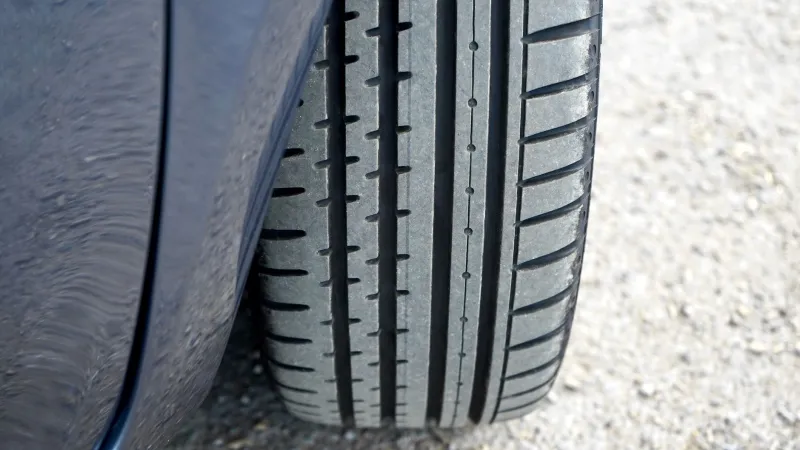
The honest working envelope is narrow. A single straight nail or screw through the central tread area, no bigger than roughly 4mm to 6mm depending on the kit, with no damage to the sidewall or shoulder, and a tyre still seated on the rim.
That is a real scenario. Builders' vans shed screws, and a slow puncture from a roofing nail is exactly the sort of thing a can will see you to a garage for.
What it cannot touch
Sidewall damage is the big one. A bulge, a cut, a chunk missing near the bead. Sealant works on tread because tread is thick and the hole is a channel. A sidewall is thin, constantly flexing and carrying the load. Nothing in a can repairs it.
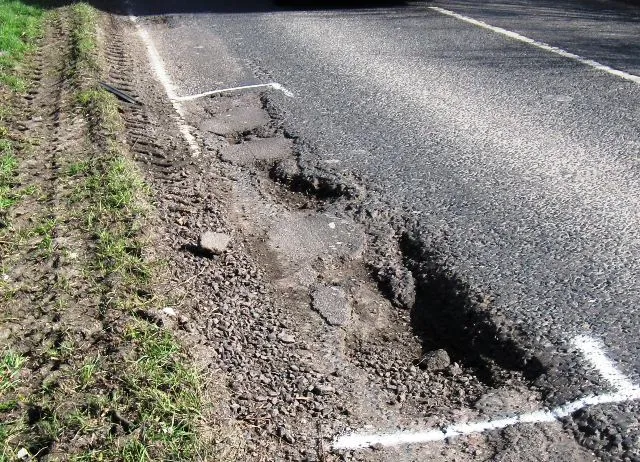
Impact damage comes next. Hitting a pothole or a kerb can pinch the tyre against the rim and break the cords inside. The tyre may hold air for a while and then let go at speed. That is the classic blowout mechanism, and no bottle of latex addresses it.
The bead is the third. If the tyre has come off the rim, which is what happens to a fully deflated tyre driven even a short distance, a kit cannot reseat it. Compressors simply do not have the volume.
Multiple punctures, cuts, torn valves, corroded rims and cracked alloys all sit outside the envelope too.
A kerb strike is its own category
A kerb strike is a blunt-force event. It damages the tyre, and often the wheel, in ways that are invisible from outside. The rubber may look fine while the inner sidewall carries a pinch mark and broken cords. The alloy may have a flat spot or a hairline crack.
If you have hit a kerb hard enough to lose pressure, sealant is not the answer and neither is topping it up and hoping. The tyre needs to come off and be inspected from the inside. A tyre with a bulge, a cut or exposed cord is not merely unwise to drive on — it can land you with a fine, points and an MOT failure that follows the car around.
Cold weather makes all of this worse
Sealant is a liquid, and liquids do not enjoy January. The colder it gets, the thicker the mixture becomes and the more slowly it spreads around the inside of the tyre. Some kits quote a working range down to minus 20, but performance at the bottom of that range is not the same as performance in a warm garage. The propellant also loses pressure as it cools.
Add the fact that winter is when potholes multiply, when tyres are more likely to be near the end of their tread, and when standing beside a deflated car on a dark hard shoulder is genuinely one of the most dangerous places in Britain, and the case for treating the kit as a last resort gets stronger rather than weaker.
Check the date before you need it
Bottles have a shelf life, usually three to five years, and there is a date stamped on the bottle or the box. If it has expired, the sealant may have separated, thickened or set solid. Replace it — a fresh one costs less than a tank of fuel.
Check the compressor works as well. Plug it into the 12V socket on your own driveway and let it run for a minute. Cigarette-lighter sockets are notoriously fussy about corroded plugs, and the moment you need it is not the moment to discover a blown fuse.
The hard shoulder protocol
If a tyre lets go on a motorway, the priority order is people, then the car, then the tyre. Hazard lights on, get left as quickly and safely as you can, and if you can reach a services or an exit, do that rather than stopping on the hard shoulder at all.
On a smart motorway the hard shoulder may be a live lane. Get out on the left-hand side, away from the traffic, behind the barrier, and call for help. National Highways can be reached on 0300 123 5000, or use an SOS phone if there is one. Never stand between the car and the passing traffic, and never attempt a wheel change on the traffic side.
On an ordinary A-road, get as far off the carriageway as you can, move everyone away from the vehicle and call your breakdown provider.
The fix that actually exists
A proper puncture repair is done from the inside, with the tyre off the rim, using a combined plug-and-patch bonded to the inner liner. British Standard BS AU 159 sets out how it should be done. It is a permanent repair for a suitable tread puncture, and it costs about the price of a takeaway.
Sealant is not a repair. It is a way of moving the problem somewhere safer, and any tyre that has had a can through it should be inspected and, in most cases, replaced once you reach your destination. Some kits also gum up the TPMS sensor inside the valve, turning a cheap puncture into a sensor replacement.
What to keep in the boot instead
A decent pressure gauge, a torch that works, a hi-vis vest for every occupant, a warning triangle for non-motorway use, and a phone charger. Know whether you have a spare or a kit, and if it is a space saver, remember the 50mph limit and the fact that it is a get-you-home device rather than a tyre.
The can is not useless. It is just far narrower in scope than the box suggests, and a British kerb has a habit of finding the one kind of damage it cannot fix.