The Kerbside Confession: Decoding the Marks on Your Tyre's Flank
Tyres are terrible complainers. They never groan, they never text you, and they never mention the afternoon you misjudged a multi-storey ramp in the rain. They just quietly keep a diary on their flanks — in scuffs, gouges, bulges and faint stamped numbers — and wait to see whether you bother to read it.
Given we spend most of our driving lives inches from a kerb, that diary is worth opening. Fifteen minutes with a torch on a Sunday morning tells you more about your car's health than most diagnostic apps.
What the sidewall actually does
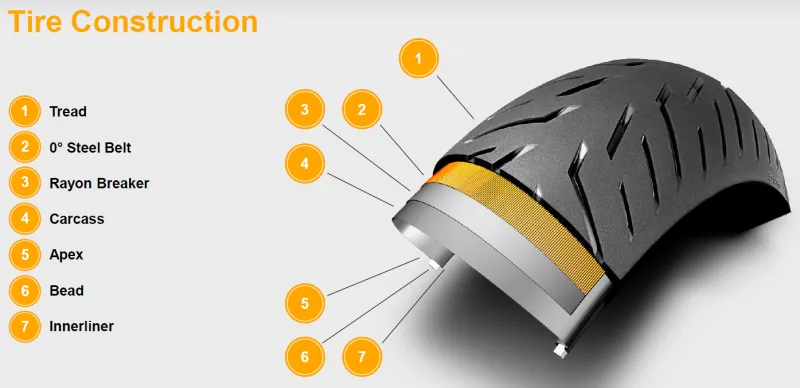
The sidewall is the flexible band between the tread and the bead that grips the rim. It is not the load-bearing hero of the tyre — that's the tread and belts — but it does the flexing, absorbs the initial hit from every pothole and kerb, and carries all the moulded information you need to buy a replacement. It is also, crucially, the part of the tyre that cannot be repaired. A nail in the tread can often be plugged; a sidewall that has been pinched against a rim is scrap.
The ten-minute kerbside inspection
Park off the public road if you can — a driveway or an empty car park is ideal — handbrake on, engine off. Then:
- Turn the wheels to full lock one way. This pulls the inner shoulder and inner sidewall into view, which is where the damage nobody notices tends to live.
- Use a torch, not your phone's screen glare. Sidewall damage hides in shadow, especially on a grey November afternoon.
- Work round all four tyres and the spare. Run a gloved hand across each flank: a bulge feels like a soft egg under the palm long before it is obvious to the eye.
- Photograph anything suspicious next to the date code so you've got a scale reference for later.
Do the fronts on full right lock, then full left, then repeat at the back. It sounds fussy. It takes less time than boiling a kettle twice.
The numbers, translated
Take a tyre marked 205/55 R16 91V. The 205 is width in millimetres, 55 is the sidewall height as a percentage of that width, R16 is the rim diameter, 91 is the load index and V is the speed rating. If you see XL or Reinforced, the sidewall is built stiffer for heavier loads — worth matching exactly when you replace it.
Then there's the DOT block. The final four digits are the date of manufacture: 4023 means the 40th week of 2023. It's not a use-by stamp and it's not part of the MOT, but rubber hardens and cracks with age, and most trade guidance treats ten years as the outer limit regardless of tread depth. A tyre can look perfectly legal at 3mm and still be a brittle liability.
Look, too, for the E-mark (type approval) and, on many tyres, a raised rim protection rib — a sacrificial lip of rubber that sits proud of the alloy. When you see a scuff on that rib rather than on the wheel, it has done its job.
Scuff, gouge or goner?
Three buckets, and honest judgement about which one you're in.
| Verdict | What it looks like | What to do |
|---|---|---|
| Cosmetic | Scuffed rim protector, light abrasion on the lettering, no cords showing | Note it, photograph it, check monthly |
| Watch closely | Chunked rubber, a shallow cut, kerb strikes that also knocked the tracking out | Get it looked at by a tyre bay within days |
| Replace now | Cords or bead wires visible, a bulge, a deep cut, perished cracking | Do not drive on it beyond a slow trip to a fitter |
The rule of thumb used in MOT testing is that a sidewall cut is a failure if it is longer than 25mm or 10% of the section width, or deep enough to reach the cords. Any bulge at all is a failure, full stop.
The bulge is the one to fear
A bulge — sometimes an egg-shaped swelling, sometimes a rippled band — means the internal cords have broken after the sidewall was pinched between kerb and rim. The rubber is now holding back compressed air on its own. There is no repair, no patch and no clever fix. It can fail at motorway speed with no warning beyond the lump you already ignored.
If you find one after a kerb strike, treat it as a same-day problem. Stick to back roads, keep the speed down, and get it changed.
What a hard kerb strike does elsewhere
A wheel that has clouted a kerb hard enough to mark the sidewall has usually passed some of that energy on. Worth checking:
- Wheel alignment — a knock can shift tracking, and you'll feel it as a pull or see it as feathered tread edges.
- The alloy itself — a buckle or flat spot shows up as a wobble or a slow leak at the bead.
- Tyre pressure — a bead that has been disturbed often leaks slowly. Check weekly for a month.
- The TPMS warning — if it hasn't triggered, don't assume nothing happened; some systems need a few miles to notice.
A tiny kit worth keeping
A pocket torch, a pair of nitrile gloves, a decent pressure gauge and a chalk pencil. Total cost under fifteen quid, and it turns a vague sense that something's not right into a clear answer. Add your tyre size and load index to a note on your phone now — you'll thank yourself when you're stood in a fitter's queue in the rain.
Sidewalls don't exaggerate. If yours is showing cords, it means it. Read the diary before it writes its final entry.