If It Scrapes, Hisses or Thumps, Stop Calling It Background Noise
Photo: Museum of London, Kate Sumnall, 2011-01-19 13:18:33, CC BY-SA 2.0, via Wikimedia Commons
Cars rarely fail with a theatrical bang. More often they send a small, annoying noise ahead of the expensive bit. A scrape as you leave the kerb, a hiss after a pothole, a thump that keeps time with the wheel: these are messages. The trick is knowing which ones mean carry on carefully and which ones mean stop before something expensive happens.
This is not a substitute for a proper inspection. It is a kerbside triage guide for the moment you hear something ugly and need to decide what to do next.
First, get somewhere safe
Do not inspect a car on a blind bend, in a live lane or half on a pavement with traffic squeezing past. Pull into a lay-by, a side street, a car park or a proper refuge area. Hazards on, handbrake on, and high-vis if you have one. On a smart motorway, use an emergency refuge area if you can and call for help rather than wandering around the carriageway.
Once you are safe, listen again. Does the noise happen when the car is moving, when you turn the wheel, when you brake, or only when you go over a bump? That single answer narrows things down more than any internet diagnosis.
The scrape: alloy, plastic or something worse
A short metallic graunch as you leave a driveway or brush a kerb is usually cosmetic alloy damage. It sounds awful because it is metal on stone, but if the tyre is holding air and the steering feels normal, you can generally drive on and inspect properly later. Look at the wheel lip and the tyre sidewall. If the tyre is cut, bulging or weeping air, the scrape is no longer cosmetic.
A plastic scrape is often an undertray, a mudflap or a bumper lip. It may be loose rather than broken. If it is dragging on the road, stop and secure it or remove it. A dragging undertray can peel back at speed and take wiring or brake lines with it.
A scrape that continues while driving, or one accompanied by a vibration, a pull to one side or a burning smell, is a stop-now noise. Do not drive through it.
The hiss: treat it as a puncture until proven otherwise
Air escaping under pressure is not a maybe. A hiss after kerb contact or a pothole can be a torn sidewall, a damaged valve, a loose sensor nut or a puncture that has just opened up. Even if the tyre looks fine, a hiss means the tyre is losing air.
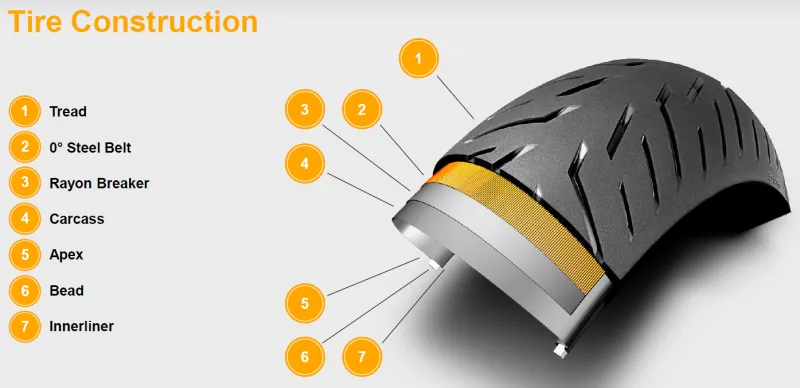
Stop safely and look at the tyre. A bulge, a tear, a nail or a clean cut in the sidewall means the tyre is compromised. Do not drive on it. Put the spare on if you can do so safely, or call recovery. A soft tyre can overheat, destroy itself and damage the wheel, and it can let go completely at speed.
If the hiss stops and the tyre holds pressure, it still needs checking. A valve that leaks only when the cap is disturbed or a rim seal that leaks only under load is not something to leave until the next service.
The rhythmic thump: something is going round
A thump that keeps pace with wheel rotation is usually tyre or wheel related. It could be a stone stuck in the tread, a flat spot from a skid, a bulge in the sidewall, a damaged tyre carcass or a wheel that has thrown a balance weight. It can also be a wheel bearing or a brake issue, but the tyre is the first thing to check.
Inspect the tread and both sidewalls. A stone in the tread can often be prised out with a screwdriver, but do it carefully and not with your fingers. A bulge or a visible cord means stop. A flat spot may smooth out after a few miles, but a thump that stays or gets worse at speed needs a garage.
If the thump is accompanied by a vibration through the steering wheel or the seat, slow down and get off the main road. If the car feels vague or unstable, stop.
The hum or drone: wheel bearing territory
A wheel bearing that is on its way out often starts as a hum or a drone that rises with speed. It may get louder when you load that side of the car by turning one way, and quieter when you turn the other. It is not usually an instant stop, but it is not a noise to ignore either.
A mild hum can get you to a garage at sensible speeds. A loud drone, a vibration, a wheel that feels hot or a grinding noise means stop sooner rather than later. A collapsed bearing can damage the hub, the brake disc and the wheel, and it can affect steering control.
The tinkle or scrape of trapped debris
A stone trapped between the brake disc and the dust shield can make a surprising amount of noise at low speed. So can gravel in a hub cap or a loose heat shield. These noises often come and go, and they are usually less serious than a tyre issue, but they still deserve a look.
Do not reach into a hot brake assembly. Let it cool, then check for obvious debris or a loose shield. If the noise continues, gets worse when braking, or is accompanied by a grinding pedal, get it checked. Brakes are not the place for wait-and-see optimism.
The stop-now list
Pull over and call for help if you hear a hiss from a tyre, see a sidewall bulge, tear or exposed cords, feel a wheel wobble, notice a strong pull to one side, smell burning, see smoke, hear metal-on-metal grinding when braking, or suspect a loose wheel. Do not drive on a visibly flat tyre, and do not use a motorway hard shoulder as a workshop unless it is a genuine emergency.
The go-slow list
The car can usually be driven gently to a garage if the noise is a light cosmetic scrape, a stone in the tread, a mild bearing hum with no vibration, or a loose plastic trim that is not dragging. Keep the speed down, avoid hard braking and cornering, and recheck after a few miles. If anything changes for the worse, stop.
What to inspect first
Start with the tyre on the noisy corner, but check all four. Look at the sidewall for bulges, cuts and cords. Check the tread for stones, nails and uneven wear. Look at the wheel rim for cracks or fresh kerb damage. Check the valve and the wheel nuts if you can do so safely. Turn the steering onto full lock to see the inner sidewall, because that is where kerb damage often hides.
Then look under the car for dragging trim, a loose exhaust or a shiny scrape mark. Use a torch and gloves. Do not crawl under a car held only by a jack, and do not put your hands near a hot exhaust or brake disc.
The decision tree in one breath
Noise plus visible tyre damage means stop. Noise plus vibration or steering pull means stop. Noise plus a hiss means stop. Noise plus no visible damage and no change in handling means drive slowly to a garage and keep listening. When in doubt, stop. A recovery truck is cheaper than a blowout, and a kerbside inspection is cheaper than both.