The Multi-Storey Gauntlet: Festive Parking Without Donating Alloy to Concrete
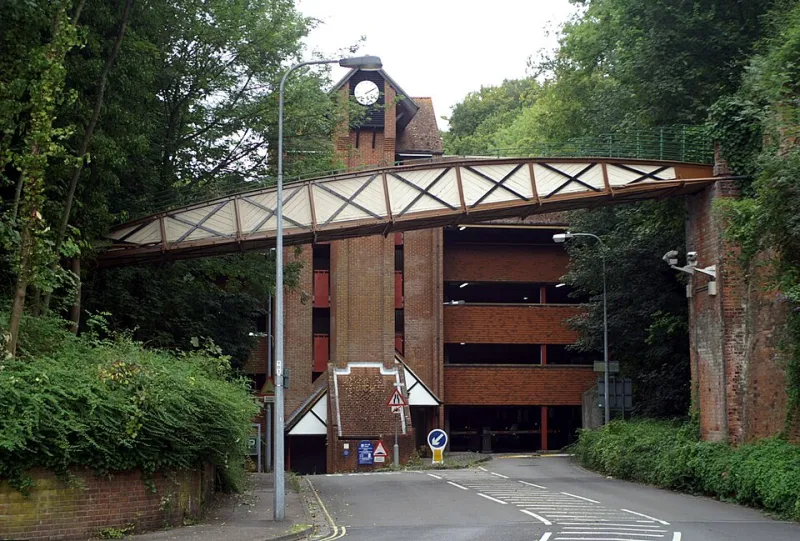
Photo: Pterre, Public domain, via Wikimedia Commons
There is a particular sound that echoes around a packed multi-storey in December: the slow crunch of a wheel being introduced to a concrete kerb by a driver who is already late. It is not dramatic. It is not even especially loud. But it is expensive, and it almost always happens at walking pace, in a queue, with someone behind you.
Festive car parks are not built to be kind. They are built to fit as many cars as possible into a concrete box, then decorated with ramps, tight turns, painted kerbs, height barriers and pillars that seem to move when you are not looking. Add wet floors, low light and a car full of shopping and the whole thing becomes a low-speed test of judgement rather than driving skill.
The good news is that most festive kerb damage is avoidable. You do not need a different car or a sixth sense. You need to treat the car park as a specific type of road, not as an afterthought once you have left the main route.
Why the Christmas car park bites harder
A multi-storey car park compresses everything that makes kerbs dangerous. The turns are tighter than they look. The ramps change gradient while you are steering. The painted lines and coloured kerbs are there to guide you, but they can also blend into wet concrete when the overhead lights are reflecting off the floor.
Then there is the human element. Festive parking involves queues, reversing, people stepping out between cars, trolleys, children in puffer jackets and drivers who are focused on finding a space rather than protecting their sidewalls. Stress shortens attention. That is when a painted kerb gets treated as decoration rather than a solid object.
Wet concrete makes it worse. A damp floor reduces grip just enough to make a slow turn feel vague, and a damp kerb edge is harder to see against the surface. If the car park has been gritted, the edges can be dirtier still, hiding the true line between tarmac and kerb.
The ramp is not a racetrack
Ramps are where many festive scrapes begin. They are narrow, often curved, and frequently have a kerb or raised edge on one or both sides. The instinct is to keep moving because someone is behind you. The smarter approach is to set the car up before the ramp, not halfway up it.
Line the car up early, use the widest part of the ramp and keep your speed low enough that you can correct without braking hard. If the ramp curves, do not cut the inside. The inside edge is exactly where the kerb waits. Take the curve a little wider than feels natural, especially in a longer car or one with a poor turning circle.
Watch for change of gradient too. A ramp that levels out or dips can make the suspension compress and the body move, but the kerb does not move with you. If you are already close to the edge, that small shift can be enough to catch a wheel or a lower bumper.
Painted kerbs are still kerbs
Car park kerbs are often painted yellow, white or red to show traffic routes, bay edges or no-parking zones. The paint makes them visible in theory. In practice, it can make them look like part of the floor markings until the moment your wheel touches one.
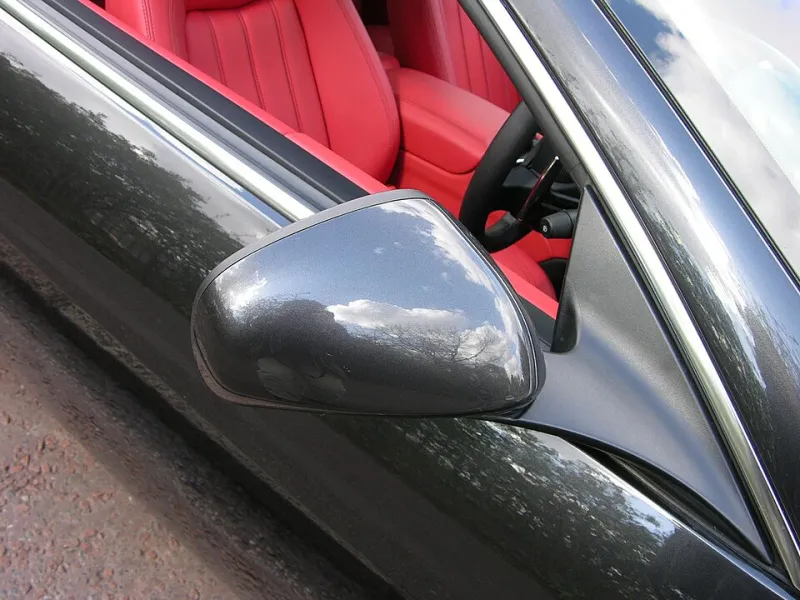
Treat every raised painted edge as a solid obstacle. If you are turning into a bay and the kerb is on your near side, do not rely on the paint to tell you where the wheel is. Use the mirror, then use your own judgement. A quick glance at the mirror before the turn is worth more than a optimistic assumption during it.
If a bay is tight and the kerb is high, consider whether the space is worth it. A slightly longer walk is cheaper than a new tyre. This is especially true if your car has low-profile tyres or diamond-cut alloys, which tend to show every contact mark and can be costly to refurbish.
Mirror discipline beats hope
Most kerb strikes happen because the driver loses track of the near-side wheel. The fix is boring but effective: set the mirrors before you move, use them during the manoeuvre and do not turn them into an afterthought.
In a multi-storey, the near-side mirror is your best friend when turning left into a bay or threading past a pillar. Dip it if your car does that automatically when reversing, and use it manually if it does not. When reversing into a space, alternate between the mirrors and a direct look over your shoulder. Cameras help, but they can flatten distance and miss the top edge of a kerb.
If someone is waiting behind you, ignore the pressure. A ten-second pause to check your line is not a delay worth apologising for. A scraped sidewall is a much longer stop.
Barriers, pillars and the things that are not kerbs
Height barriers and low rails are the other festive hazard. Roof boxes, bike racks and even a sunroof left tilted can turn a standard car park entrance into a no-go. Know your vehicle height before you enter, and do not assume the barrier is set for the tallest car in the queue.
Pillars are the vertical equivalent of kerbs. They do not move, they are often painted in a colour that blends with the background, and they love a rear quarter panel. When reversing, watch the pillar nearest the boot, not just the one beside the driver. If the space is between two pillars and the car is long, consider whether a different bay would be less stressful.
The pre-shopping checklist for the 2026 festive rush
Before you leave home, do a quick kerbside check. It takes five minutes and gives you a baseline for later.
- Check tyre pressures when the tyres are cold, including the spare or space saver.
- Look at both sidewalls for existing cuts, bulges or scuffs. A fresh mark after shopping is easier to spot if you know what was already there.
- Confirm your tyre tread depth is legal and sensible for wet weather. The legal minimum is 1.6mm, but wet grip falls away before that.
- Make sure the mirrors are set for you, not for the last driver.
- Know your car's height if you use a roof box or rack.
- Put a torch and a cheap tyre gauge in the glovebox. Car park lighting is rarely generous.
When you arrive, slow down before the ramp, not on it. Choose a bay with a little breathing room if you can. Reverse in if it gives you a better view of the kerb, and take the walk.
After the scrape: what to check
If you suspect a kerb strike, do not just drive home and forget it. Stop somewhere safe and legal, then check the wheel and tyre. Look for a scuff on the alloy, a chunk out of the sidewall, a bulge, or a cut that goes deeper than the surface. Check the tyre pressure if you have a gauge. A sidewall bulge is not a cosmetic issue; it means the structure has been damaged.
If the steering feels different, the car pulls to one side or the wheel is visibly out of shape, get it checked properly. A festive shopping trip is not worth a tyre failure on the way home.
The multi-storey is not out to get you. It is just indifferent. Treat the ramps with respect, the painted kerbs as real concrete and the mirrors as part of the manoeuvre rather than a decoration. Your alloys will thank you, and your Christmas shopping will end with a full boot rather than a recovery truck.