Nose First, Nerves Last: Clearing a Driveway Lip Without the Dreaded Crunch
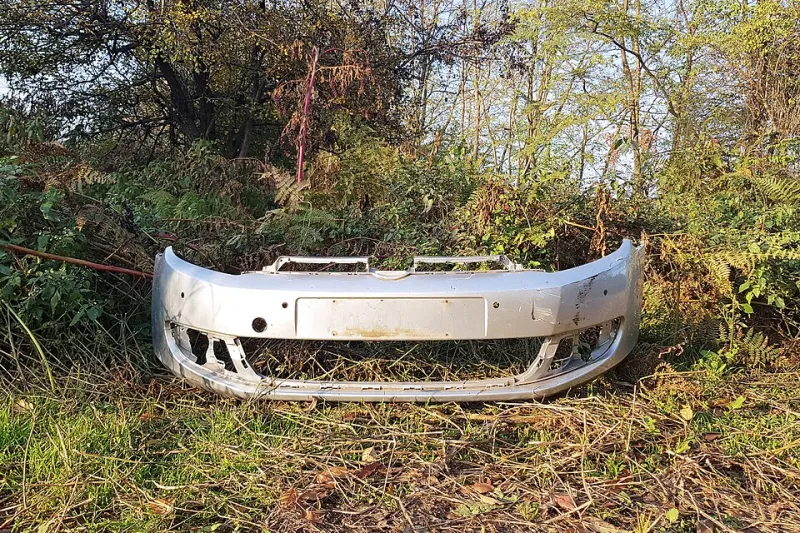
Photo: Mænsard vokser, CC BY-SA 4.0, via Wikimedia Commons
There is a specific noise a front bumper makes when it meets a driveway lip. It is not a bang. It is a long, dry, gravelly scrape, followed by a moment of silence while you decide whether to swear or pretend you didn't hear it.
I have made that noise. I have also spent an afternoon watching a neighbour attempt the same driveway at the same hopeless angle three times in a row, each attempt producing the identical wounded sound. It is a very British kind of motoring misery: nobody is hurt, nothing is urgent, and the fix is almost entirely free.
Why the nose is always the victim
Modern cars have long front overhangs and low valances. Pedestrian-safety shaping, bigger grilles, air-deflecting undertrays and a styling habit for deep splitters all push the lowest point of the bodywork forward and down, right where a kerb can reach it. On plenty of family hatches the gap between splitter and tarmac is barely 110mm, and a dropped kerb with a raised tarmac apron can present a 60mm step.
Do the arithmetic and it isn't close. What saves you is not clearance alone but angle — a lip approached square-on is a wall; approached at 40 degrees it is a slope.
Measure once, argue with yourself never
Before you perfect your technique, get the numbers.
- Find your lowest point. That's usually the front splitter or the leading edge of the undertray, occasionally a mudflap or a towbar eye at the back. Slide a tape measure vertically from the ground to it on level tarmac.
- Measure the lip. Lay a straight edge across the high point of the driveway ramp, then measure from that straight edge down to the road surface.
- Leave a margin. Aim for 25–30mm of spare clearance. Less than that and you're relying on tyre pressures and an empty boot.
Remember that clearance shrinks the moment you brake. Nose-dive under braking can eat 20mm of ride height in a second, which is why so many scrapes happen when a driver stops sharply at the lip rather than rolling over it.
The cardboard test
If you're unsure, don't guess with your paint. Fold a piece of stiff cardboard to roughly the height of your lowest point, lay it on the road just before the ramp, and creep forward. Get a second person to crouch at the side with a torch and watch the nose — a spotter costs nothing and sees far more than you can from the driver's seat. Phone cameras on a propped-up brick work equally well if you're on your own.
The approach that actually works
- Come in at an angle. Thirty to forty-five degrees, one front wheel first. This lets each corner rise onto the ramp in turn rather than the whole nose arriving at once.
- Brake early, release late. Slow down well before the lip, then ease off the brake just as the front wheels reach it, letting the suspension unload and the nose lift.
- Don't steer while the nose is over the step. Turning changes the geometry and drops a corner. Straighten up first, then commit.
- Avoid full lock near kerbs. It swings the front overhang outward and puts the sidewall at risk at the same time.
- If in doubt, reverse in. Most cars have more clearance at the back, and reversing puts the driven wheels in a better position for a slow climb. You also get mirrors and a camera to judge it by.
Leaving is often worse
The reverse of the journey is where people get caught out, because the lip now falls away and the nose dips as the front wheels drop off the ramp. Same rules apply: angle it, ease off gently, and don't rush the exit because someone is waiting behind you on the pavement.
Low-cost protection, no building work
If your driveway is a genuine offender, these are the sensible first moves:
- A rubber lip protector. A self-adhesive strip along the underside of the splitter absorbs the scuff instead of the paint.
- Drop the load. A boot full of tools and a full tank can cost you 15mm of ride height. Clear it out before deciding your driveway is impossible.
- Check your pressures. Under-inflated tyres sit lower. Don't overinflate to compensate — just get them right.
- A tapered fillet of tarmac or a rubber ramp on your own land smooths the transition cheaply. Anything sitting on the public footway needs council approval, and loose ramps left across a pavement are an obstruction and a trip hazard — don't be that household.
- Rethink the apron. If the ramp is a badly built mound of old tarmac, having it reshaped by a contractor is often cheaper than a second bumper respray.
When to admit it's the driveway, not you
If the step is over 50mm and your car is genuinely low, no amount of technique will save the splitter. That's when a proper tapered apron — or, honestly, parking on the street — becomes the rational choice.
But for the vast majority of us, the fix is a habit: slow down, angle in, and let the car do the work. Thirty seconds of discipline against a £400 bumper repair. It isn't a hard sum.